Building Premium Villas from the Ground Up in Cyprus: What Really Matters
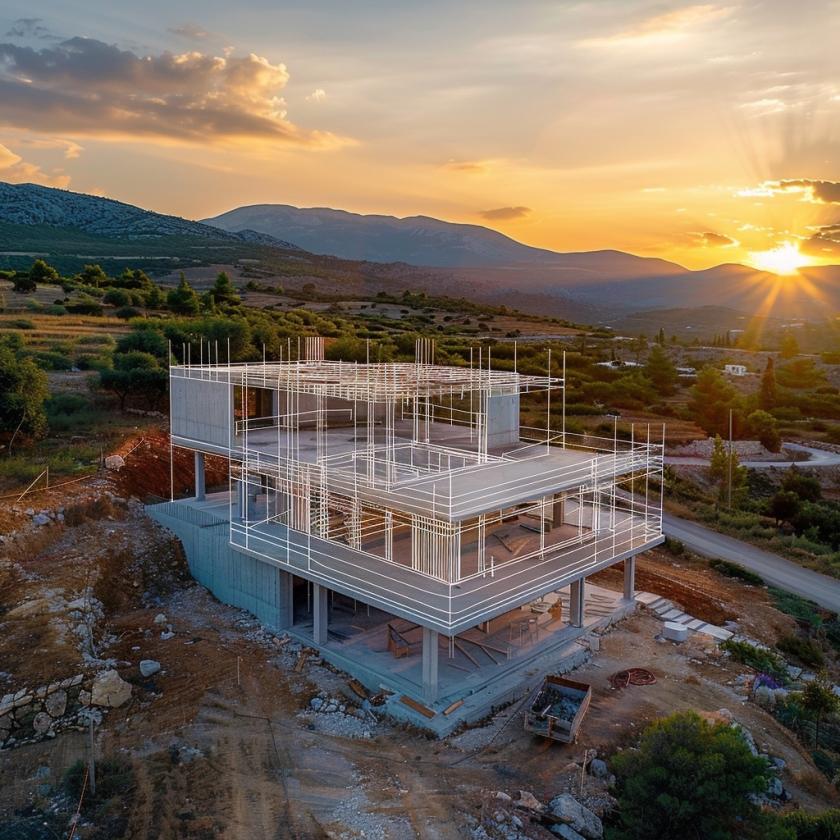
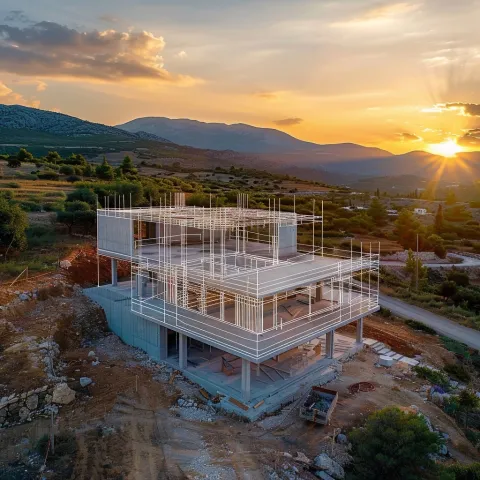
When clients come to us with a request to build a villa from the ground up in Cyprus, we always start by talking about the journey ahead.
Cyprus is an island with its own rules, climate, logistics, and construction realities.
And all of this directly affects both the building process and the long-term performance of the home.
Below, we share our hands-on experience, examples from completed projects, and the key points that truly deserve attention when building a villa from scratch in Cyprus.
The island sets the rules — and that matters from day one
Building on an island is always more complex than building on the mainland. Not because the specialists are worse — but because every decision is tied to logistics, lead times, and careful planning in advance.
In one of our current projects — a villa of over 800 m² — we defined specific façade and engineering solutions already at the design stage, knowing that some equipment and materials would take several months to reach Cyprus.
If these aspects aren’t planned early, the process turns into endless pauses:
— “let’s wait for delivery,”
— “we’ll revise the solution,”
— “let’s do a simpler temporary option.”
In premium construction, this almost always leads either to lost time or to compromises in quality.
Cyprus climate: hot summers and humid winters — not a myth, but reality
There’s a common illusion that Cyprus is “eternal summer.” In reality, winter is often the true test of a home’s quality.
Rain, increased humidity, and temperature fluctuations directly affect:
— roofs and terraces,
— façades,
— waterproofing,
— junctions and material connections.
We’ve repeatedly seen properties where issues began 2–3 years after handover simply because the island’s specifics were not taken into account.
In our projects, we always build in an additional margin of reliability — because fixing these mistakes after construction is far more expensive and complicated.
Seismic activity: not a reason for panic, but a reason for professionalism
Cyprus is a seismically active region — that’s not new. The important part is this: seismic requirements affect not only the structure, but the architecture as a whole.
Building form, spans, number of floors, large glazing areas — all of it must be calculated and coordinated as one system.
In our projects, we never “adjust as we go.” Structural decisions are defined in advance so that architecture, engineering, and structure work together as a single, integrated solution.
Materials: aesthetics is only half the question
In premium villas, materials are not just about visuals.
For example, on one of our projects we deliberately moved away from standard plaster finishes in favor of natural stone and more complex façade systems.
The reason wasn’t only aesthetics. It was also that:
— these materials are more resistant to moisture,
— handle temperature changes better,
— retain their appearance longer without requiring repairs.
In Cyprus, a material either works for you for years — or starts “living its own life” after just a few seasons.
Engineering: not the basics, but comfort you feel every day
Talking about a “smart home” in the premium segment is pointless — it’s already a standard. What matters much more is how all engineering systems work together.
In our projects, we focus heavily on:
— microclimate management,
— ventilation and humidity control,
— integrating engineering into the architecture — not adding it on top.
For instance, solar panels in Cyprus are not a trendy add-on but a practical tool: during the warmer months they can cover a significant share of a home’s energy consumption. But only if they’re integrated properly at the planning stage — not added later “as an extra.”
One main contractor instead of ten — why it’s critical
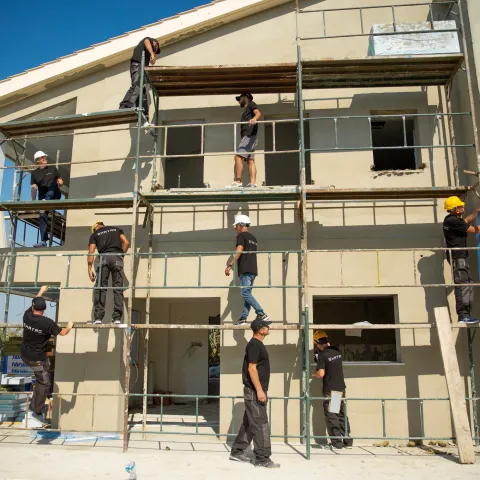
This brings us to why experience truly matters. In SHATRO projects, we act as the main contractor on site.
For the client, it means something very simple: you work with one team, not with dozens of separate contractors, designers, engineers, and suppliers.
Our responsibility is to take charge of:
— coordination of every stage,
— quality control,
— timeline control,
— accountability for the final result.
Who performs the work “hands-on” is not your concern. Your concern is the result, the timeline, and the feeling of control. And that is exactly what one coordinated team can provide — not a fragmented set of participants.
Conclusion
Building a premium villa from scratch in Cyprus is always a journey. And the person — or team — guiding you through that journey determines not only the final home, but also what the process itself will feel like.
The island doesn’t forgive rushing, random decisions, or a lack of structure. But it rewards those who can plan, think several steps ahead, and take full responsibility.
That’s how we approach every project — calmly, systematically, and without compromises where compromises shouldn’t exist.
If you are considering building a villa from the ground up in Cyprus and want the process to be structured, transparent, and predictable — we will be glad to discuss your project.